An in-progress annotated bibliography of books related to the First Special Service Force and 474th Infantry Division. Listed alphabetically by author’s last name. Please contact me if you have recommendations for books to add to this bibliography.
The Devil’s Brigade
By Robert H Adleman and Col. George Walton
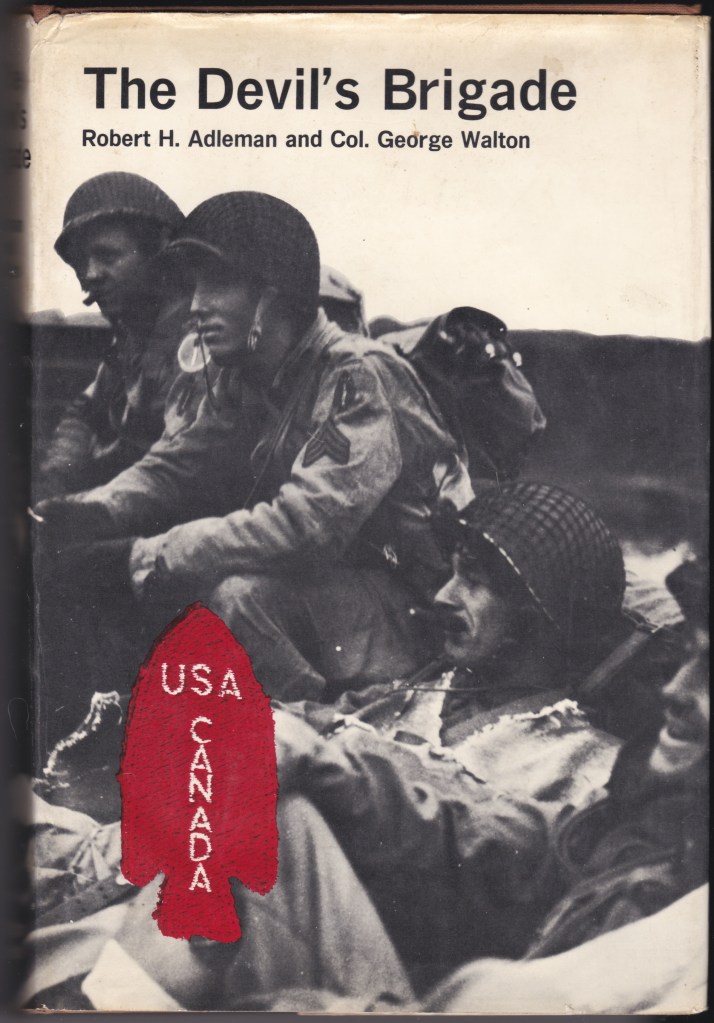
1966 (first edition), Chilton Company Publishers, Philadephia
Adleman and Walton’s text looks nearly identical in size to Burhans mentioned below. Where they differ is that Burhans is more an individual’s account while Adleman and Walton drew on dozens of questionnaires and interviews with surviving members of the Force, allowing their text to generally include richer and more varied accounts of the events. The text includes some nice glossy black & white photos and a couple of drawn maps to help illustrate battles in Italy and France, but otherwise lacks the reference materials the Burhans book includes.
Your Son, “Chick”
By John F. Bruns

2009, self-published, printed in Las Vegas.
Like Ross Carter’s book below, Your Son, “Chick” isn’t an account of World War II from a member of the Force. However, Snook, a member of the FSSF, does make several appearances in the letters, which are written home to Joannie and Francy (and sometimes Gee), all of whom feature on this blog as well. All of the letters of Chick’s linked from this blog are within this book.
The First Special Service Force: A War History of the North Americans, 1942-1944
By Lt. Col. Robert D. Burhans

March 1947 (first edition), Infantry Journal Press, Washington, D.C., 376 pages.
Burhans’s book is regarded as one of the canonical accounts of the First Special Service Force’s time in formation and action. When researching the events surrounding Snook’s letters, I’ll often have Burhans and Adelman/Walton’s texts out side by side, as each contains variation in the level of detail they provide about a given event. For example, Burhans devotes little more than a page to the sea voyage to the Aleutians, while Adleman and Walton provide three pages of anecdotes and additional details about the same Pacific passage (though the reverse is true for other events, the texts truly do complement each other). As a firsthand account, it is a thorough history loaded with facts, though far drier in tone compared to more narrative accounts from the war, such as the Carter text below. Where the book really shines are the reference materials. The inside covers of the book are North American and European maps showing the movements of the Force. The book also has a number of photographs (color and B&W), timelines of Force battles, posts, camps & stations. Following the text, Burhans then includes a complete roster of men by full name, company, home, and whether or not they were killed. A highly comprehensive reference source.
Those Devils In Baggy Pants
By Ross S. Carter

1962 (8th printing, 1951 original date), A Signet Book, The New American Library of World Literature, New York.
I found Carter’s book in a box with other items related to the Force and am certain it had belonged to Snook. While the Devils in Baggy Pants are not the same as the Devil’s Brigade or Black Devils, Carter’s paratrooping unit, the 82nd Airborne Division, was not unlike the Force in purpose, execution, and the terror they struck into the hearts of German forces. The two groups both fought in the mountains of Italy and the FSSF is even mentioned in Carter’s narrative account (p. 74). Despite not portraying the Force, TDIBP paints a vivid picture of what fighting for your life in those mountains was like, providing an eye-witness account of some of the same battles the Force fought through. Readers begin the book learning how few members of Carter’s unit survive, but even knowing they’re inevitabilities, readers are so engaged by the colorful characters and individual’s appeal that we mourn and rage over each brother’s death along with Carter and the other survivors.
Once Upon A Wartime
By Peter Layton Cottingham

1996, Leech Printing, Brandon MB
This memoir of a Canadian Forceman, Peter Cottingham, begins with background on the war and Canadian recruitment, then gives his entire history with the First Special Service Force all the way through to his tenure as the FSSFA president in the 1980s. For those more familiar with Force from the perspective of US soldiers, the book includes a chapter on the return to the Canadian Army.
The Force
By Saul David
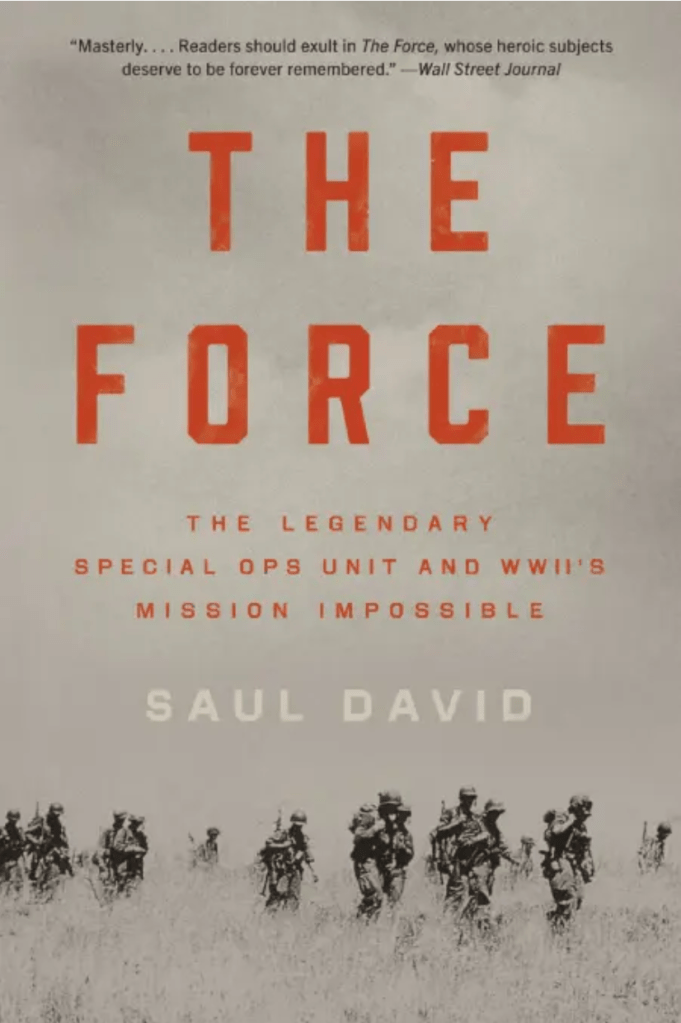
2019, Hachette Books, New York
A compelling narrative history of the First Special Service Force which would easily engage any novice to the subject. Well-annotated, with a solid bibliography, it’s unquestionably apparent that David deep-dove into research to present a clear, accurate, and vivid picture of the Force’s experience.
Kenneth
By Susan Lentz

2007, AuthorHouse, Bloomington IN
Kenneth, much like this blog, focuses on an individual Forceman (and 10th Mountain Infantryman, Kenneth McDougall) and is framed within his relationship with his love, army nurse Pearl Yarbrough. The book is a lovely, intimate picture of a couple separated by the horrors of war, and representative of how the memories of these brave soldiers who did not return home are kept alive even today by the descendants of those who loved them.
The Black Devils: A Pictorial History of the First Special Service Force
By Ray Routhier
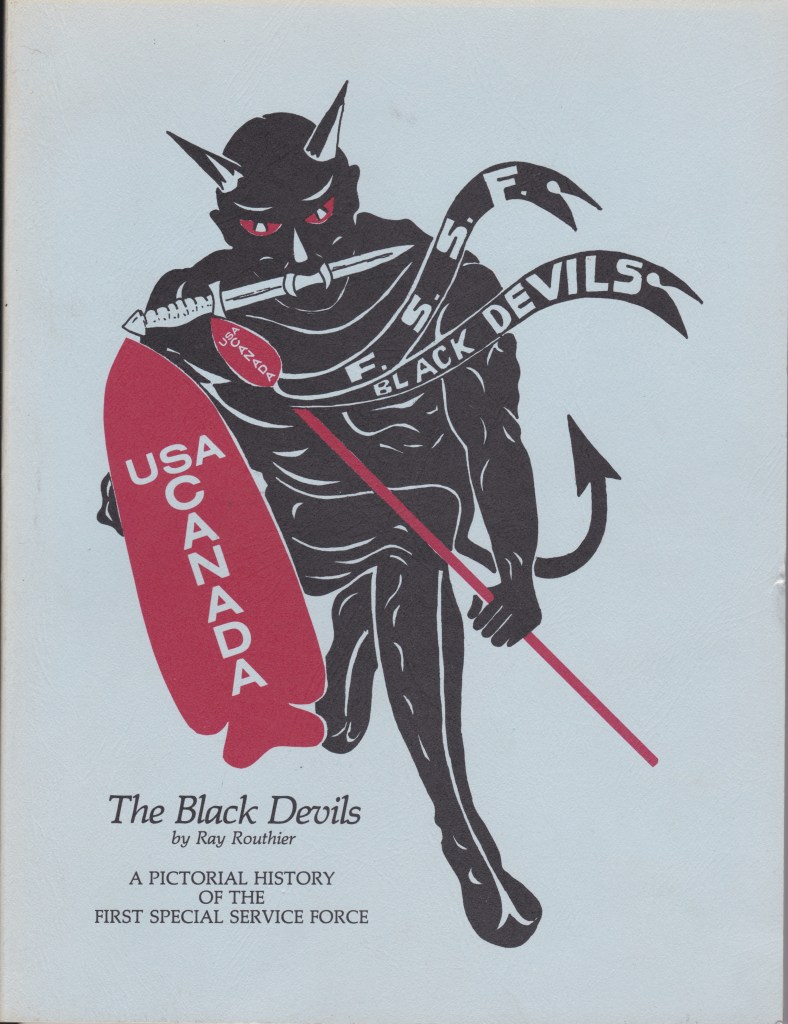
1982 (first edition), Advanced Litho Printing, Great Falls, Montana, 77 pages.
I was given this book by a military and weapons book dealer whom I was lucky enough to know through the Oregon Knife Collector’s Association. After sharing Snook’s memoirs and some memorabilia with him, he surprised me with this very kind gift (and it’s signed by Routhier too!). The pictorial history is lovely, filled with action and posed shots from training and the war, as well as maps and photos of equipment, uniforms, patches and other items associated witht the Force. Inside the cover is a helpful chart of the chain of command for the FSSF and other charts, informational lists and graphics make this a rich resource despite the limited and more encyclopedic text.
The Black Devil Brigade
By Joseph A. Springer

2001, Pacifica Military History, Pacifica CA.
Written by the nephew of 5-2 Private John W. Springer, who was killed in action on at Anzio, as a collected oral history of the Force. The helpful glossary and maps at the beginning are excellent for reference throughout the text, but where the book really shines in comparison to other FSSF-focused texts is in its collection of memories directly from the Forcemens’ own mouths. Each chapter contains introductory text followed by the firsthand accounts of dozens of the Black Devils themselves.
Articles
Magazine, newspaper, and other periodical references to the Force. Many more to be added, suggestions welcome.
Life Magazine
September 13, 1943, vol. 15, no. 11.
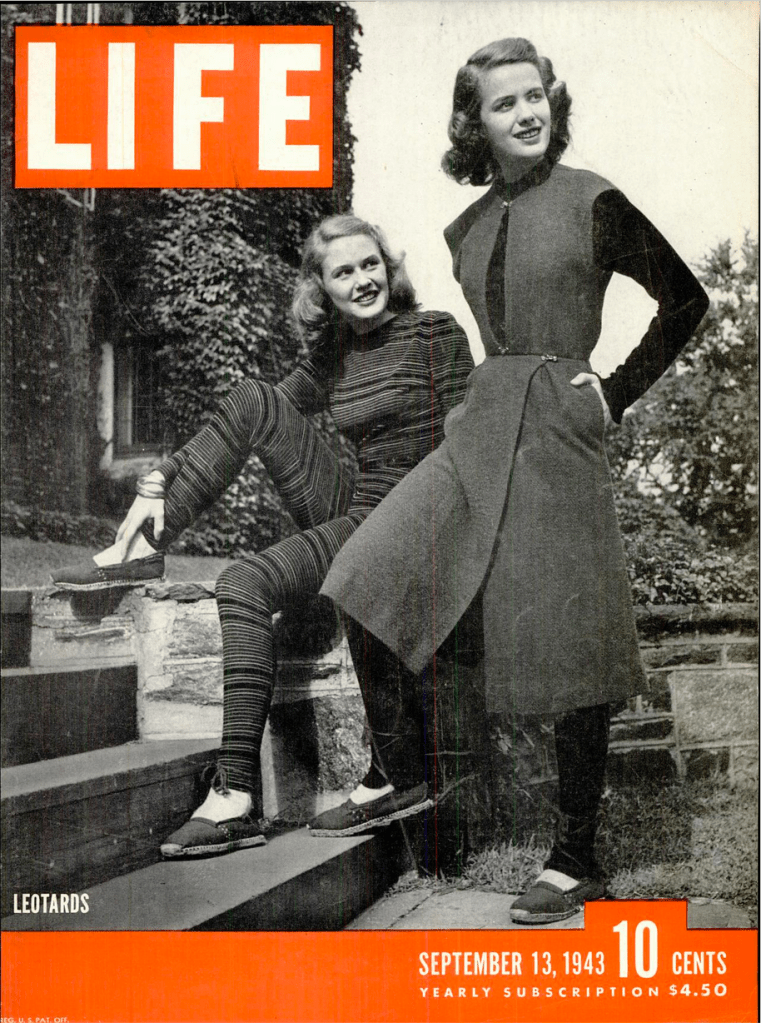
Allied Troops Retake Deserted Kiska
by Dmitri Kessel, pp. 25-31.
Snook refers to this issue of Life in his October 1st, 1943 letter home to Gee, hoping she’s able to get one so she can save the pictures. The text is brief but the photographs are indeed a remarkable window into conditions and features surrounding the invasion.
 Letters From Snook